International certification • 100% online • At your own pace

Diploma Courses: Montessori Guide

Programs designed to give you deep, practical knowledge of Montessori education and the Montessori method. Graduate as a Montessori Guide with an international Montessori certification issued by AMMAC.

We are the Montessori Association of Mexico (Asociación Montessori de México A.C.), founded in 1965 — a Mexican institution with international reach: we train Montessori Guides online for students all over the world.

See programs and pricing
decoration

By the time you complete your program, you will be ready to work as a Montessori Guide at any school in the world and make a real difference in your students' lives. Study from anywhere with our online platform.

Your access includes: Google Workspace (1 TB of Drive storage, an institutional email address, and Google services), plus study supported by Google AI (NotebookLM, Gemini).

Developed with reference to MACTE / AMICONOCER competency standard (SEP)RVOE application in processGoogle for EducationGemini AI
Google Classroom
Google for Education
Gemini AI
NotebookLM

Program content

Everything you need to become a Montessori Guide

Each subject unfolds in blocks of about 9 sessions (one per week), with materials, activities, and guidance from your course instructor to answer questions and go deeper.

1. Common Core
MONTESSORI PHILOSOPHY

Discover the history and principles behind the Montessori method.

OBSERVATION METHODS

Develop the ability to observe and understand the unique needs of each of your students.

NEUROEDUCATION

Discover how the human brain develops during the earliest stages of life.

EDUCATIONAL PSYCHOLOGY

Discover how students integrate their environment and how to ensure meaningful learning.

MUSIC THERAPY

Learn about the importance of music in learning through the Montessori bells.

PSYCHOMOTOR DEVELOPMENT

Explore how movement is fundamental to development and learning.

INCLUSIVE EDUCATION

Learn how knowledge, the environment, and pedagogy are prepared for every kind of learner and every child's needs.

CREATIVE INTELLIGENCE

Foster creativity and innovative thinking in all of your students.

The Montessori method in practice

You will learn Maria Montessori's scientific materials and how to present them at each stage of development.

2. Materials and Presentations
...

Format

Accessible, flexible classes

Study at your own pace with new content every week and ongoing support:

  • Weekly releasesA new class is published every Saturday at 8:00 a.m. Mexico City time (GMT-6).
  • Activities at your own paceSubmit whenever you like while the subject is active (about two months per subject).
  • 24/7 accessReview your classes whenever and wherever you want.
  • One-on-one guidanceRequest a video call with your instructor whenever you need it.
See programs and pricing

Programs and pricing

Choose your program and take the next step

International certification, fully online, with guidance from certified Montessori Guides.

Montessori Certification

International certification

Montessori Guide

International programs certified by AMMAC. Program prices (tuition or diploma course) are separate from the enrollment fee, which you only pay once.

Planning to complete more than one level? If you have already completed Nido and Infant Community or Children's House, you can transfer the common-core credits: the next diploma course is about 11 months shorter. Plus, we never charge the enrollment fee again once you have completed a level with us or if you take another program afterward.

Prices subject to availability. Terms and Conditions apply.

Enrollment
You pay the enrollment fee only once. If you later take another diploma course or program with us, we never charge it again.

One-time enrollment with lifetime access to the institution

MXN 4,900

Enrollment fee (today)
4,900 MXN

Dos pasos tras el pago: cuenta en el portal y expediente administrativo, todo vinculado automáticamente (sin comprobante de pago).

Pagar inscripción en líneaPagar por transferencia

Tras confirmar el pago: crear tu cuenta y completar el expediente en el sitio.

Faculty

Meet the people who will accompany you through your certification

Throughout this diploma course you will be accompanied by people with experience, training, and a deep commitment to the Montessori philosophy. We want you to get to know the team that will walk alongside you through this journey.

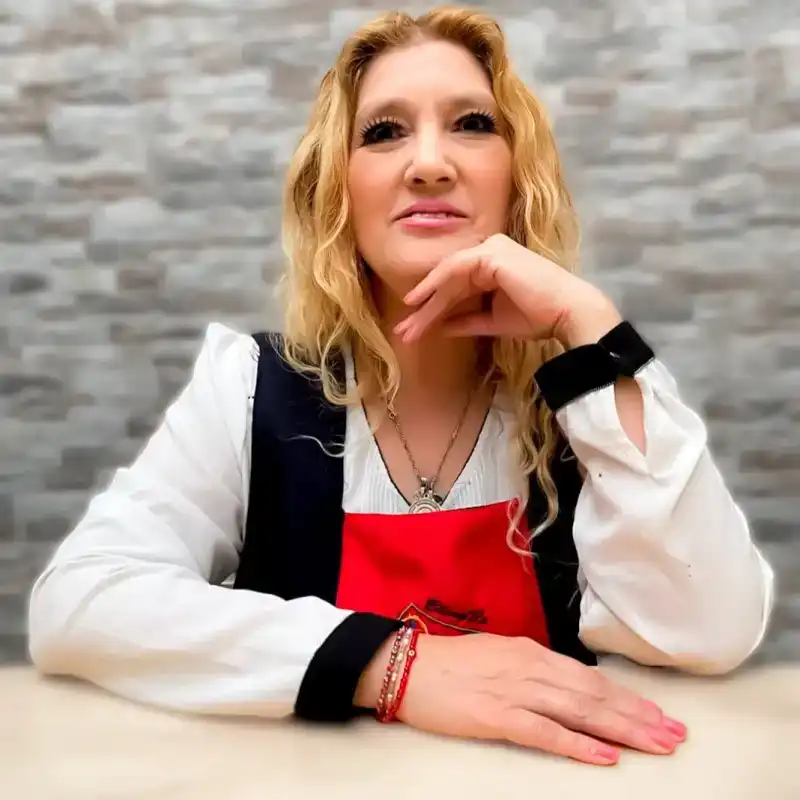
Roxana Muñoz

Institutional and academic mentorship

Roxana Muñoz

Roxana Muñoz Guevara holds a Licenciatura (Bachelor's degree) in Preschool Education from the Universidad Femenina de México, with further studies in Special Education, Applied Psychomotor Development, and Child Psychology, and trained as a Montessori Guide for Elementary I and II at the Centro de Desarrollo y Comunicación.

She also completed additional studies with Dr. Cato Hanrath, a student of Maria Montessori. Since 1997 she has served as President of the Asociación Montessori de México A.C., where she coordinates the Professional Montessori Guide Diploma Courses and teaches Philosophical Anthropology, Montessori Philosophy, and Montessori Materials.

She is currently General Director of the Elementary School and of the Centro Educativo Montessori Kalpilli, as well as a trainer of Montessori Guides in Mexico and abroad. Her mentorship within the diploma course brings academic depth, institutional experience, and a perspective deeply faithful to the Montessori philosophy.

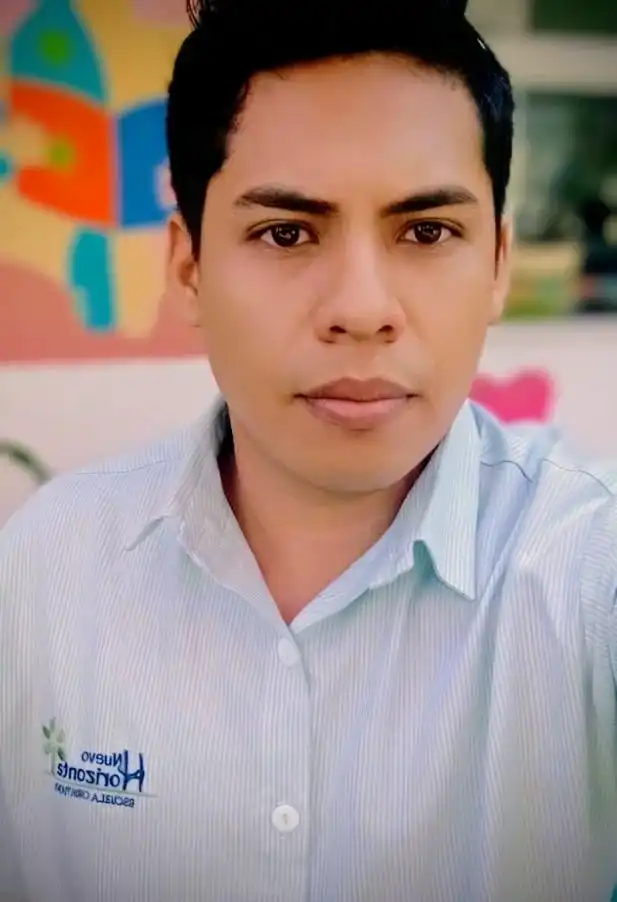
Iván López Carmona

Inclusive education and teaching practice

Iván López Carmona

Iván is part of the teaching team for this diploma course. He holds a Licenciatura in Educational Intervention with an inclusive-education focus from the Universidad Pedagógica Nacional, a Licenciatura in the Arts from IDMA, and a Master's degree in Educational Sciences from the Instituto de Estudios Universitarios.

He brings 15 years of experience in education and a solid track record within the Montessori philosophy. He is certified as a Montessori Guide for Children's House, Elementary I and II, and Nido and Infant Community by the Asociación Montessori de México.

He is currently an in-person course instructor for the Asociación Montessori de México at the Acapulco campus, training Children's House and Elementary Guides. He also coordinates the Montessori department at ECNH and develops workshops for teachers in public and private schools.

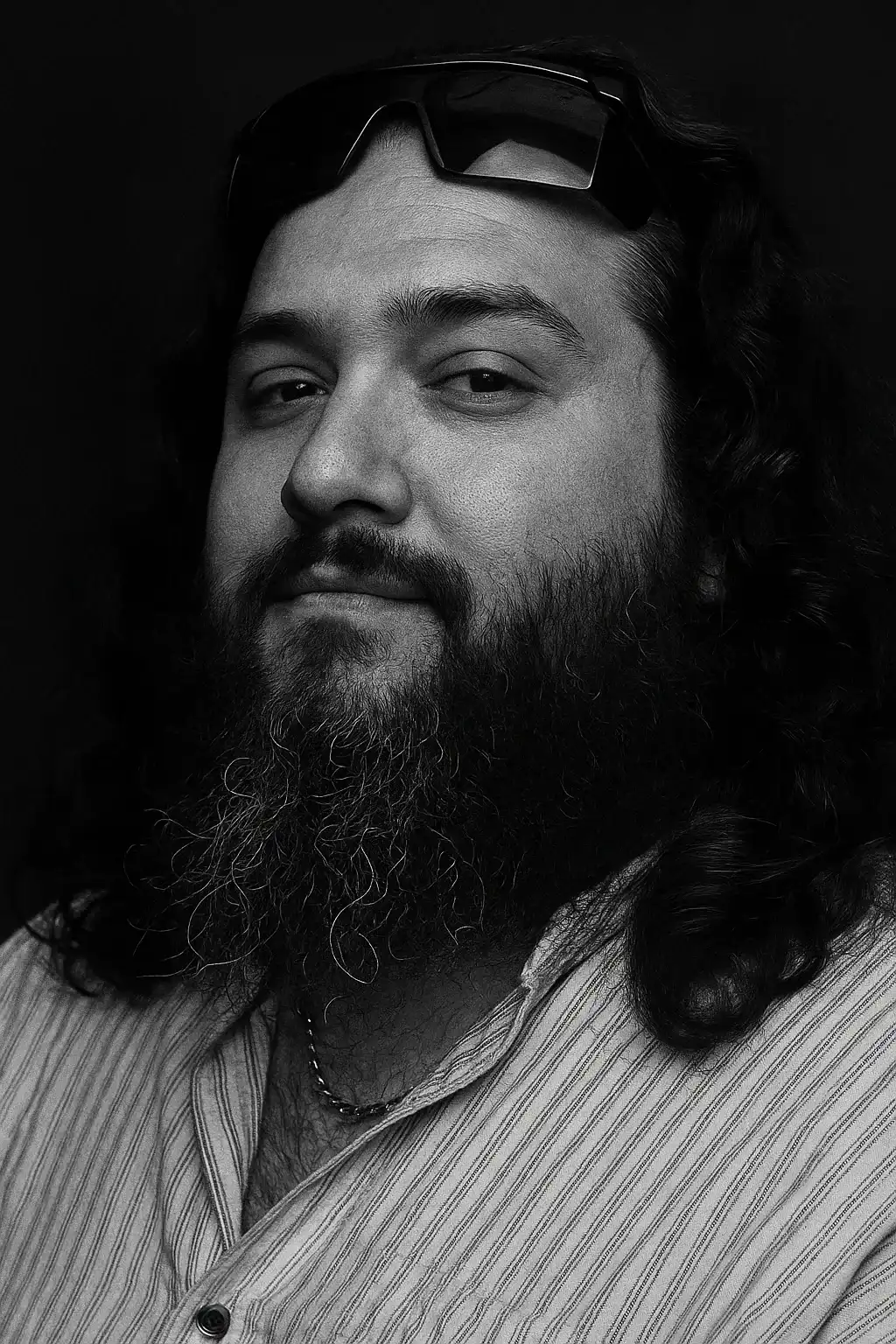
Carlos Romero

Academic management and educational technology

Carlos Romero

Carlos is part of the team that supports the organization, follow-up, and development of the diploma courses. His relationship with Montessori is also lived experience: his entire education, starting in the Nido, was Montessori, so he knows the method firsthand.

He holds Licenciaturas in Economics and in Public Accounting and is also a programmer. This combination allows him to bring administration, analysis, technology, and academic organization to the service of Montessori training. He has also pursued Master's studies in Music, focusing on piano and composition.

Within the diploma course, he contributes structure, clarity, and practical solutions that strengthen the student experience, weaving together Montessori, academic management, analytical thinking, and technology with a genuine commitment to education.

Learning objectives framework

Aligned with international Montessori training

Our diploma course organizes the entire training into seven competency domains, mirroring the international Montessori training domains (MACTE / AMI), developed with reference to AMI foundations. Each domain is developed across the six cognitive levels of Bloom's Taxonomy, so the training doesn't just deliver content: it builds understanding, judgment, and the capacity to create.

D1

Philosophical and Historical Foundations

The philosophical, scientific, and historical foundations of the method: Maria Montessori's life and work and the principles that sustain the pedagogy.

D2

Human Development and the Planes of Development

Human development across the planes of development and the characteristics of each period — the foundation for accompanying children.

D3

The Prepared Environment and the Materials

The design of the prepared environment and the knowledge, presentation, and purpose of each of the Montessori materials.

D4

Scientific Observation

Observation as a scientific tool: recording, interpreting, and responding to the real needs of each child.

D5

Role and Transformation of the Adult (the Guide)

The adult's inner preparation and transformation to become a Guide: attitude, ethics, and service to the child's development.

D6

Pedagogy of the Curriculum Areas

Pedagogical mastery of the Montessori curriculum areas and the sequence of presentations within them.

D7

Community, Family, and Leadership

The bond with families and the school community, and the Guide's leadership inside and outside the environment.

Six cognitive levels

Each domain develops progressively through Bloom's Taxonomy, from initial recognition all the way to creation.

  1. 1RememberRecognize and recall the fundamental concepts.
  2. 2UnderstandExplain ideas and make sense of them in your own words.
  3. 3ApplyUse what you've learned in real situations in the environment.
  4. 4AnalyzeDistinguish parts, relationships, and principles.
  5. 5EvaluateAssess, justify, and make pedagogical decisions.
  6. 6CreateDesign and propose new solutions and materials.

Every activity in the diploma course has a learning objective coded as “Domain·Level” — for example, D1·Analyze: the domain (D1–D7) indicates the area of competency, and the Bloom's Taxonomy verb indicates the cognitive level you are expected to develop. That way, every task you complete has an explicit, assessable learning purpose.

Enrollment

3 steps to get started

Complete the enrollment form, and then you only need:

Enroll now — Enrollment form
1
Enrollment

📄 Enrollment sheet and payment options in the same form:Open the enrollment form

2
👨‍🎓 Personal Documents

For your international certificate:📍 Proof of address🪪 Government-issued ID👶 Birth certificate👨‍🎓 Most recent academic certificateThere is no minimum education requirement to take the course; some schools require a bachelor's degree to lead a classroom — that depends on each institution.

3
📜 Signed regulations

We are committed to quality education in an environment of respect. Review and sign our program regulations to begin your diploma course.

Learn about our scholarship program

Requirements

  • Be fully up to date on all activity submissions
  • Attend at least 80% of the classes
  • Complete at least one virtual practice session (conference or project)
All applications are reviewed and evaluated by the academic committee

Subject to availability

scholarships image